
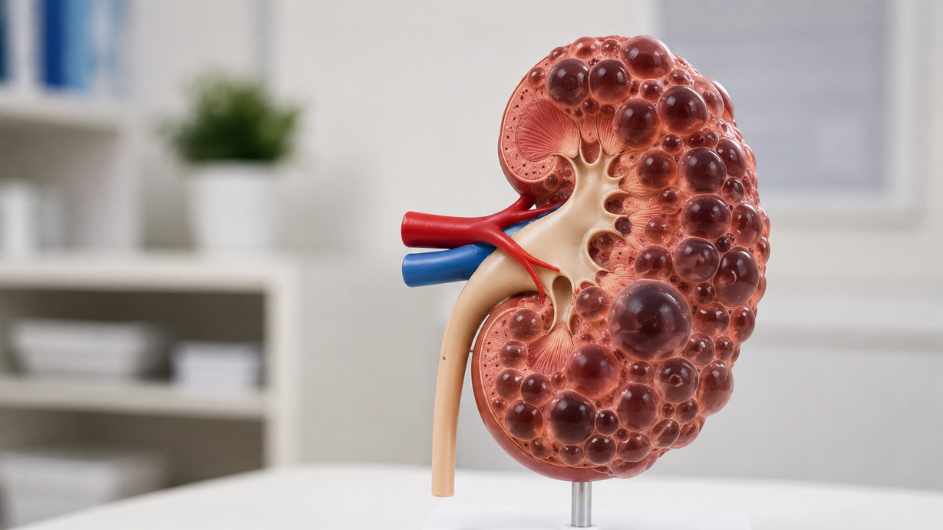
Polycystic Kidney Disease
Polycystic kidney disease (PKD) is an inherited condition in which fluid-filled cysts enlarge the kidneys and reduce their function over time. The Kidney Clinic offers monitoring and long-term management to protect kidney health.
Polycystic Kidney Disease (PKD)
An inherited condition where fluid-filled cysts grow in the kidneys. It can't be cured — but with the right care, its progression can be slowed and your kidney function protected for longer.
What is polycystic kidney disease?
Polycystic kidney disease is an inherited disorder in which clusters of fluid-filled cysts develop in the kidneys. Over time the cysts grow, enlarging the kidneys and gradually reducing their ability to filter — which can eventually lead to high blood pressure and kidney failure. Cysts can also form in other organs, such as the liver.
At The Kidney Clinic, Dr. Anil K. Patel focuses on slowing progression, managing complications like high blood pressure, and supporting you through every stage.
Types of PKD
Autosomal Dominant (ADPKD)
The most common form, usually appearing in adulthood. A parent with ADPKD has a 50% chance of passing it to each child.
Adult-onsetAutosomal Recessive (ARPKD)
A rare form that appears in infancy or childhood, requiring both parents to carry the gene. It can affect the kidneys and liver early in life.
Childhood-onsetSymptoms & causes
As cysts grow, you may notice:
- High blood pressure
- Pain in the back or side
- Blood in the urine
- Recurrent urinary infections or kidney stones
- A feeling of fullness or a swollen abdomen
Diagnosis & treatment
Diagnosis
Imaging — ultrasound, CT, or MRI — detects and measures the cysts, alongside your family history and, where useful, genetic testing.
Controlling blood pressure
Keeping blood pressure well controlled is one of the most effective ways to protect kidney function in PKD.
Managing complications
Treating pain, urinary infections, and kidney stones, and addressing cysts when needed, with diet and hydration guidance.
Slowing progression
Regular monitoring and, in selected cases, specific medication to slow cyst growth and preserve function.
Advanced care
If PKD progresses to kidney failure, dialysis or kidney transplantation, with full support throughout.
Living well with PKD
- Keep your blood pressure within target
- Stay well hydrated and follow a kidney-friendly diet
- Limit salt, and avoid smoking and excessive alcohol
- Attend regular monitoring to track kidney function
- Consider screening and counselling if PKD runs in your family
Why choose Dr. Anil K. Patel
14+ years of dedicated nephrology and dialysis practice
Specialist training at MPUH Nadiad under Dr. M.M. Rajapurkar
Multidisciplinary care — nephrologists, dietitians, and counselors
Transplant centre partnerships with Mahavir Hospital & Universal Hospital
Long-term monitoring focused on slowing progression
Care in English, Hindi & Gujarati, with prompt response
Frequently asked questions
What is polycystic kidney disease?
Is PKD inherited?
What are the symptoms?
How is it diagnosed?
Can PKD be cured?
How is it treated?
Does PKD lead to kidney failure?
Should my family be screened?
Can lifestyle changes help?
Concerned about polycystic kidney disease?
Speak directly with Dr. Anil K. Patel for assessment, family screening advice, and care that slows PKD and protects your kidneys.