
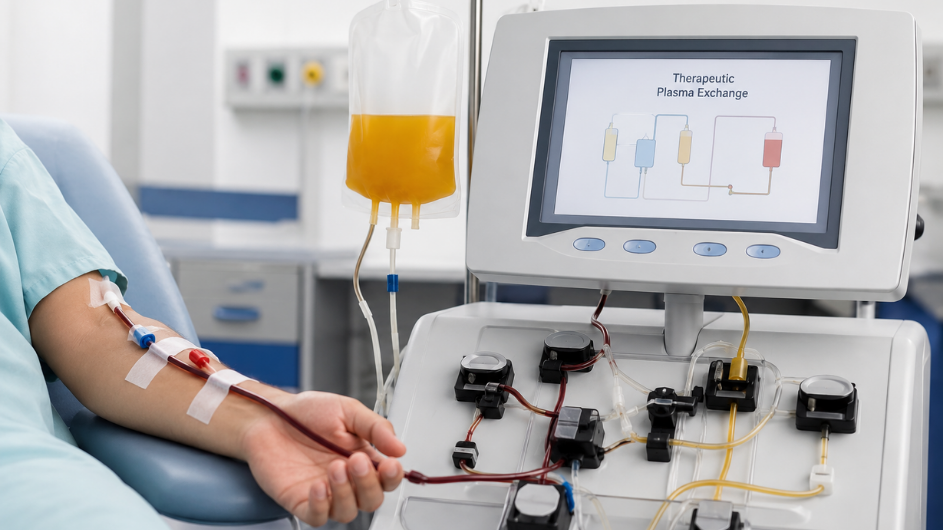
Therapeutic plasma exchange
Therapeutic Plasma Exchange (TPE), also known as plasma exchange or plasmapheresis, is an innovative medical procedure used in Nephrology & Dialysis to treat a range of conditions. It involves the ...
Therapeutic Plasma Exchange (TPE)
A non-surgical procedure that filters harmful antibodies and toxins out of your blood plasma — used to treat immune-mediated kidney disease and protect kidney function.
What is plasma exchange?
Therapeutic Plasma Exchange (TPE), also called plasmapheresis, removes a patient's plasma — the fluid part of blood that can carry harmful antibodies, immune complexes, and toxins — and replaces it with donor plasma or a plasma substitute. By clearing these harmful components, TPE helps restore the balance of the blood and supports better kidney function.
At The Kidney Clinic, Dr. Anil K. Patel uses TPE as part of a tailored treatment plan, alongside medication and other therapies, for the right conditions and patients.
Why consider TPE?
TPE targets the root of many immune-mediated kidney problems by removing what's driving the damage:
- Removes harmful antibodies, immune complexes, and toxins
- Non-surgical and generally well-tolerated
- Complements medication and other therapies
- Can improve kidney function in immune-mediated disease
- Allows early intervention to slow disease progression
Conditions TPE can treat
In nephrology and dialysis, TPE is used for conditions including:
- Lupus nephritis
- Anti-glomerular basement membrane (anti-GBM) disease
- Rapidly progressive glomerulonephritis
- Severe, immune-mediated acute kidney injury
- Other conditions where harmful antibodies or proteins build up in the blood
The TPE procedure
Consultation & evaluation
A thorough review of your history, lab tests, and imaging confirms whether TPE is suitable and identifies the underlying condition to be treated.
Vascular access
A catheter — often a central venous line — is placed so blood can be safely withdrawn and returned during the session.
Plasma separation & exchange
A specialised machine separates plasma from your blood cells. The plasma carrying the harmful substances is removed and replaced with donor plasma or a substitute.
Return & monitoring
The treated blood is returned to you while your vital signs are monitored throughout. A session usually takes a few hours; the number of sessions depends on your condition.
Recovery & follow-up
Most people tolerate TPE well, with only brief mild fatigue or dizziness afterwards. Our team monitors your progress and plans any further sessions.
What to expect & safety
TPE is generally safe, but as with any procedure there are possible risks we watch for:
- Infection at the catheter site
- Allergic reaction to replacement fluids
- Low blood pressure during the session
- Clotting issues or electrolyte imbalances
Why choose Dr. Anil K. Patel
14+ years of dedicated nephrology and dialysis practice
Specialist training at MPUH Nadiad under Dr. M.M. Rajapurkar
Multidisciplinary care for complex immune-mediated kidney disease
Transplant centre partnerships with Mahavir Hospital & Universal Hospital
Advanced apheresis technology in a monitored, controlled setting
Care in English, Hindi & Gujarati, with prompt response
Frequently asked questions
What is Therapeutic Plasma Exchange (TPE)?
When is TPE used in nephrology and dialysis?
How does TPE work?
What is the procedure like?
Are there any risks?
How effective is TPE?
What is recovery like?
How do I prepare?
Is TPE covered by insurance?
Where can I learn more?
Considering therapeutic plasma exchange?
Speak directly with Dr. Anil K. Patel to find out whether TPE is right for your condition and what the treatment would involve.