
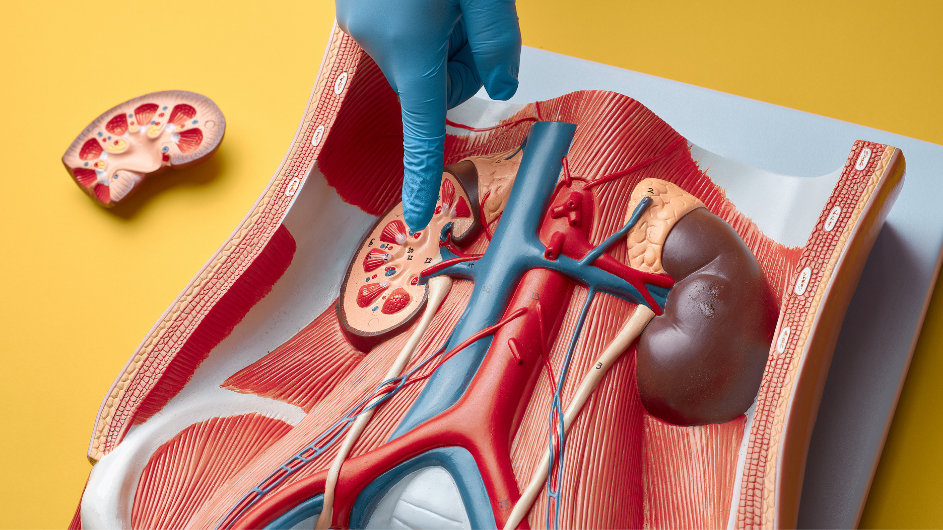
Paired Kidney Exchange
Paired kidney exchange lets two incompatible donor-recipient pairs swap donors so both patients receive a compatible kidney. The Kidney Clinic coordinates paired-exchange transplants from evaluation to surgery.
Paired Kidney Exchange in Surat
A second chance at a compatible kidney — even when your willing donor isn't a match for you.
What is a paired exchange?
A Paired Kidney Exchange (PKE), also known as a Swap Kidney Transplant, helps patients receive a compatible kidney even when their willing donor is not medically suitable for them. By matching two or more incompatible donor-recipient pairs, you can receive a compatible kidney while your donor helps another recipient in need.
At The Kidney Clinic, Dr. Anil K. Patel guides patients through the entire paired exchange process — from evaluation and matching to legal approvals and long-term post-transplant care.
Why consider a paired kidney exchange?
Many patients have a healthy, willing donor but cannot proceed because of blood group incompatibility or a positive cross-match. A paired exchange identifies compatible matches between different donor-recipient pairs, increasing the chance of a successful transplant.
- Access to a compatible kidney despite donor incompatibility
- Reduced waiting time compared to deceased-donor transplants
- Better long-term outcomes than remaining on dialysis
- Opportunity to receive a living-donor kidney
- Safe and legally regulated transplant pathway
Who may benefit from a paired exchange?
You may be a candidate if:
- A family member or spouse is willing to donate but is not compatible
- Blood group incompatibility prevents direct donation
- Cross-match testing shows a high risk of rejection
- You wish to avoid a prolonged wait for a deceased-donor kidney
The paired exchange process
Evaluation
Both donor and recipient undergo detailed medical testing, including blood group matching, tissue typing, and an overall health assessment.
Finding a compatible pair
Your donor-recipient pair is matched with another incompatible pair whose donor is compatible with you — and vice versa.
Legal authorization (THOTA)
All paired exchange transplants are conducted under the Transplantation of Human Organs and Tissues Act. We assist with documentation and committee approvals.
Surgery
Transplant procedures are coordinated and performed simultaneously by experienced transplant teams at affiliated hospitals in Surat.
Recovery & follow-up
Patients receive comprehensive post-transplant monitoring, medication management, and long-term nephrology care under Dr. Patel.
Why choose Dr. Anil K. Patel
500+ successful kidney transplants and 14+ years of nephrology experience
Advanced transplant training at MPUH Nadiad under Dr. M.M. Rajapurkar
Expertise across living-donor, deceased-donor, and paired exchange programs
Transplant centre partnerships with Mahavir Hospital & Universal Hospital
Complete THOTA documentation and authorization support
Care in English, Hindi & Gujarati, with prompt emergency assistance
Frequently asked questions
What is a paired kidney exchange?
Why would I need a paired exchange?
Is a paired exchange safe?
Can more than two pairs be involved?
How long does the matching process take?
What are the success rates?
Considering a paired kidney exchange?
Speak directly with Dr. Anil K. Patel to understand your transplant options, eligibility, and the steps involved in a paired kidney exchange program.