
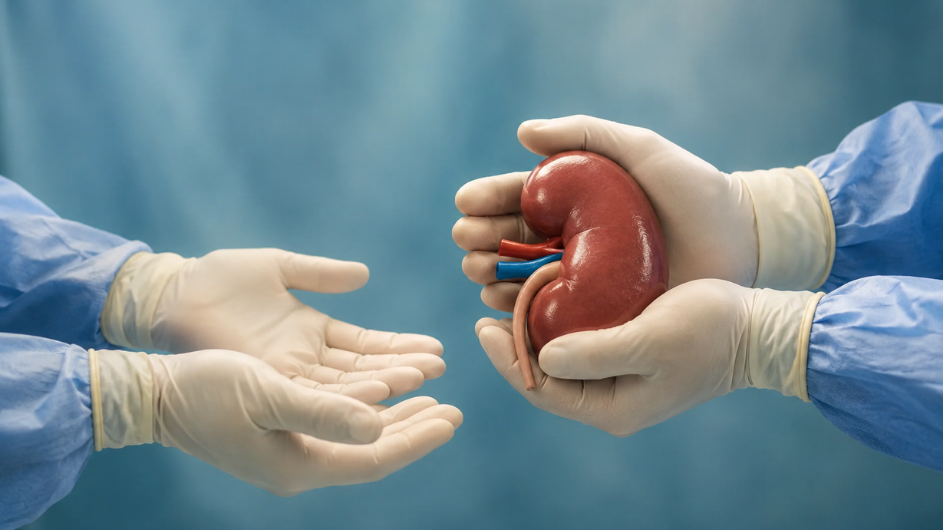
Deceased Donor Transplant
A deceased (cadaveric) donor transplant places a kidney from a deceased donor into a patient with kidney failure. The Kidney Clinic manages cadaveric transplant work-up, listing and surgery in Surat.
Deceased Donor (Cadaveric) Transplant
A kidney from a registered deceased donor, matched through the state allocation system — a path to life off dialysis when no living donor is available.
What is a deceased donor transplant?
A deceased donor (cadaveric) transplant places a healthy kidney from a registered deceased donor into a recipient with kidney failure. It's a vital option for patients who don't have a suitable living donor, offering a real chance to regain kidney function and quality of life.
At The Kidney Clinic, Dr. Anil K. Patel guides patients through the full journey — evaluation, joining the waiting list, the matching process, surgery, and lifelong post-transplant care.
Why a deceased donor transplant?
End-stage kidney disease brings fatigue, fluid retention, high blood pressure, and electrolyte imbalances — often caused by diabetes, hypertension, autoimmune disorders, or genetic conditions. When no living donor is available, a deceased-donor kidney keeps transplantation within reach.
- An option when no living donor is available
- A chance at life off dialysis with restored kidney function
- Access to the state organ allocation system
- High success rates with modern immunosuppression and care
- Full support through listing, waiting, and surgery
Who may benefit?
A deceased-donor transplant may suit you if:
- You have end-stage renal disease and are on or nearing dialysis
- You do not have a compatible living donor
- You are fit enough for transplant surgery
- You are willing to join the deceased-donor waiting list
The deceased donor process
Evaluation & listing
A full work-up with blood and tissue typing confirms your fitness for transplant. If suitable, you are added to the deceased-donor waiting list.
Waiting & matching
When a donor kidney becomes available, it is matched on blood type, tissue compatibility, medical urgency, and waiting time through the state allocation system.
The organ offer
When a match is found you are called in promptly. A final cross-match and checks confirm the kidney is suitable before surgery proceeds.
Surgery
The donated kidney is placed in your lower abdomen and connected to your blood vessels and ureter by our experienced transplant team at affiliated Surat hospitals.
Recovery & lifelong care
Immunosuppressant medication, regular follow-up visits, and ongoing monitoring protect your new kidney and overall health for the long term.
What we provide
- Pre-transplant evaluation & waiting-list management
- Post-transplant care & immunosuppressive medication management
- Psychological counseling & support groups
- Nutrition guidance & rehabilitation
- Clear education for patients and families
- A full team — nephrologists, surgeons, nurses, psychologists, support staff
Why choose Dr. Anil K. Patel
500+ successful kidney transplants over 14+ years of nephrology practice
Advanced transplant training at MPUH Nadiad under Dr. M.M. Rajapurkar
Both living-donor and deceased-donor programs under one specialist
9+ hospital network across Surat for transplant surgery
Full guidance through evaluation, listing, and the allocation system
Care in English, Hindi & Gujarati, with prompt emergency response
Frequently asked questions
What is a deceased donor kidney transplant?
How is a deceased donor kidney obtained?
How are recipients selected?
What is the waiting time?
How successful are these transplants?
What is post-transplant care like?
What are the risks and complications?
Can I still have a living donor transplant?
How can I become an organ donor?
How do I get started?
Considering a deceased donor transplant?
Speak directly with Dr. Anil K. Patel to understand your options, your eligibility, and how the waiting list and allocation process work.