
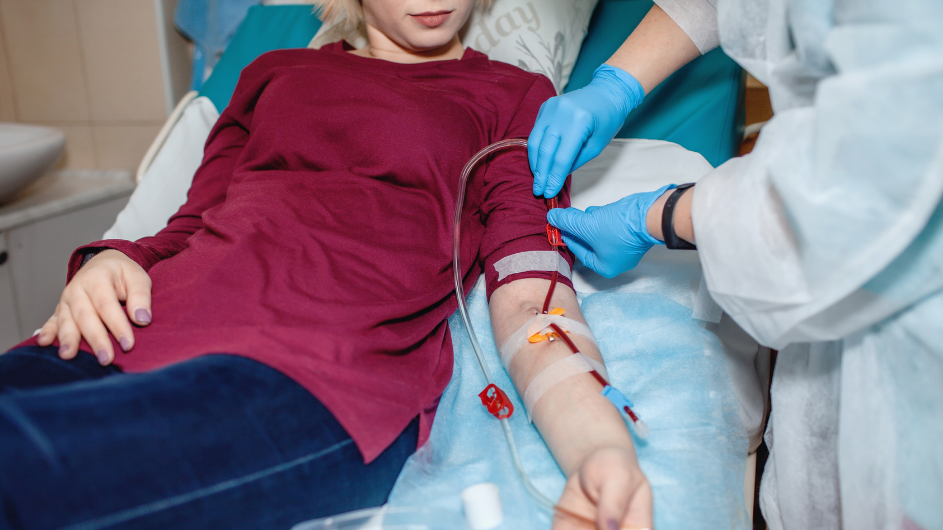
Peritoneal dialysis
Peritoneal dialysis uses the lining of your own abdomen to filter the blood and can be done at home. The Kidney Clinic offers CAPD/APD set-up, training and ongoing support for patients across Surat.
Peritoneal Dialysis
A flexible, home-based way to filter your blood — using your body's own peritoneal membrane, on a schedule that fits your life.
What is peritoneal dialysis?
Peritoneal dialysis is a kidney-replacement therapy that uses the peritoneal membrane — the natural lining of your abdominal cavity — as a filter. A sterile solution is placed into the abdomen through a soft catheter; waste and excess fluid pass from the blood across the membrane into the solution, which is then drained away.
At The Kidney Clinic, Dr. Anil K. Patel and the dialysis team assess your suitability, place the catheter, train you for safe home treatment, and support you throughout.
Advantages of peritoneal dialysis
- Flexible treatment you can do at home
- Helps preserve your remaining kidney function
- Gentle, gradual fluid removal
- Independence in managing your own care
- No need for vascular access or related blood complications
Who is a candidate?
Peritoneal dialysis may suit you if:
- You have end-stage renal disease with a well-functioning peritoneal membrane
- You prefer a flexible, home-based schedule
- You have limited vascular access options
- You want to be actively involved in your own care
Types of peritoneal dialysis
CAPD
Continuous Ambulatory Peritoneal Dialysis — manual exchanges done by hand through the day, typically 3–4 daytime exchanges plus one overnight. No machine needed.
APD
Automated Peritoneal Dialysis — a machine (cycler) performs the exchanges automatically overnight while you sleep, freeing up your day.
The peritoneal dialysis process
Evaluation & suitability
Blood tests, imaging, and assessment confirm that peritoneal dialysis is right for you and that your peritoneal membrane works well.
Catheter placement
A soft catheter is surgically placed into the abdominal cavity, usually through a small incision near the navel, serving as the route for solution in and waste out.
The exchange cycle
Sterile dialysate flows in through the catheter. Over a set dwell time, waste and excess fluid pass from your blood across the membrane into the solution.
Drain & repeat
The used solution is drained out, carrying waste with it, and a fresh exchange begins — done by hand (CAPD) or automatically overnight (APD).
Training, monitoring & follow-up
We train you in safe home exchanges and sterile technique, then track effectiveness with regular check-ups and lab tests, adjusting your plan as needed.
Why choose Dr. Anil K. Patel
14+ years of dedicated nephrology and dialysis practice
Specialist training at MPUH Nadiad under Dr. M.M. Rajapurkar
Multidisciplinary care — nephrologists, dialysis nurses, and dietitians
Transplant centre partnerships with Mahavir Hospital & Universal Hospital
Home-dialysis training and ongoing patient support
Care in English, Hindi & Gujarati, with prompt response
Frequently asked questions
What is peritoneal dialysis?
How does it work?
Who is a candidate?
What are the advantages?
Are there different types?
How often is it performed?
What are the potential complications?
How is the catheter inserted?
Can it be done at home?
How does it compare to hemodialysis?
Is it suitable for children?
How is the dialysis solution obtained?
Can I travel while on peritoneal dialysis?
How is effectiveness monitored?
Considering peritoneal dialysis?
Speak directly with Dr. Anil K. Patel to find out whether peritoneal dialysis suits you and what home-based treatment would involve.