
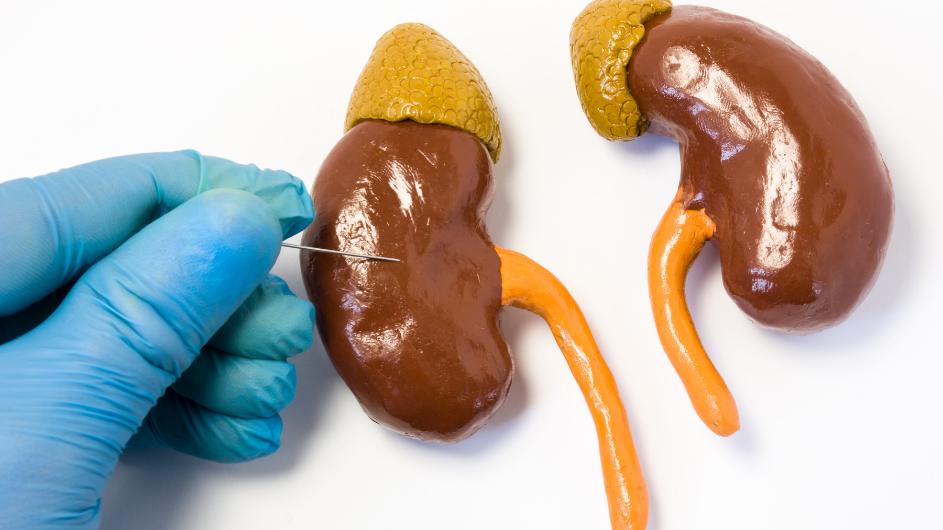
Kidney biopsy
A kidney biopsy takes a tiny sample of kidney tissue to diagnose the cause of kidney disease and guide treatment. Dr. Anil K. Patel performs ultrasound-guided renal biopsies safely at The Kidney Clinic.
Kidney Biopsy
The gold-standard test for an accurate diagnosis — a small tissue sample that reveals exactly what's affecting your kidneys and guides the right treatment.
What is a kidney biopsy?
A kidney biopsy is a procedure in which a small sample of kidney tissue is removed and examined under a microscope. It lets us assess the kidney's structure and function at a cellular level — making it the most accurate way to diagnose many kidney diseases and decide on the right treatment.
At The Kidney Clinic, Dr. Anil K. Patel performs image-guided biopsies safely and comfortably, with careful monitoring before, during, and after the procedure.
When a biopsy helps
A kidney biopsy is used to:
- Diagnose glomerular diseases
- Investigate chronic kidney disease of unclear cause
- Find the cause of nephrotic syndrome or persistent protein or blood in the urine
- Assess possible kidney transplant rejection
- Guide and monitor your treatment
Types of kidney biopsy
- Percutaneous biopsy — a thin needle through the skin, guided by imaging (most common)
- Laparoscopic or open biopsy — used in specific situations where the percutaneous route isn't suitable
The biopsy procedure
Preparation
We review your history and blood tests, including clotting, and you may be asked to pause certain medications beforehand.
Image-guided sampling
Under local anaesthesia, a thin needle is guided by ultrasound or CT to the kidney, and a small tissue sample is taken.
Observation
You are monitored for a few hours afterwards to make sure there are no immediate complications.
Laboratory analysis
The sample is examined in the lab; results usually take a few days to come back.
Results & plan
Your doctor explains the findings, what they mean, and the next steps in your treatment.
Aftercare & safety
A kidney biopsy is generally safe, but as with any procedure there are possible risks we watch for:
- Bleeding
- Infection
- Pain at the biopsy site
- Rarely, damage to nearby structures
Why choose Dr. Anil K. Patel
14+ years of dedicated nephrology and dialysis practice
Specialist training at MPUH Nadiad under Dr. M.M. Rajapurkar
Multidisciplinary care — nephrology with pathology and radiology input
Transplant centre partnerships with Mahavir Hospital & Universal Hospital
Image-guided biopsy with careful pre- and post-procedure monitoring
Care in English, Hindi & Gujarati, with prompt response
Frequently asked questions
What is a kidney biopsy?
Why is it performed?
How is it performed?
Is it painful?
What are the potential risks?
How long is recovery?
What can I expect afterwards?
How soon will I get results?
Are there alternatives?
Can I have a biopsy if I have kidney disease?
Has a kidney biopsy been recommended?
Speak directly with Dr. Anil K. Patel to understand why the biopsy is needed, what it involves, and what your results will mean.