
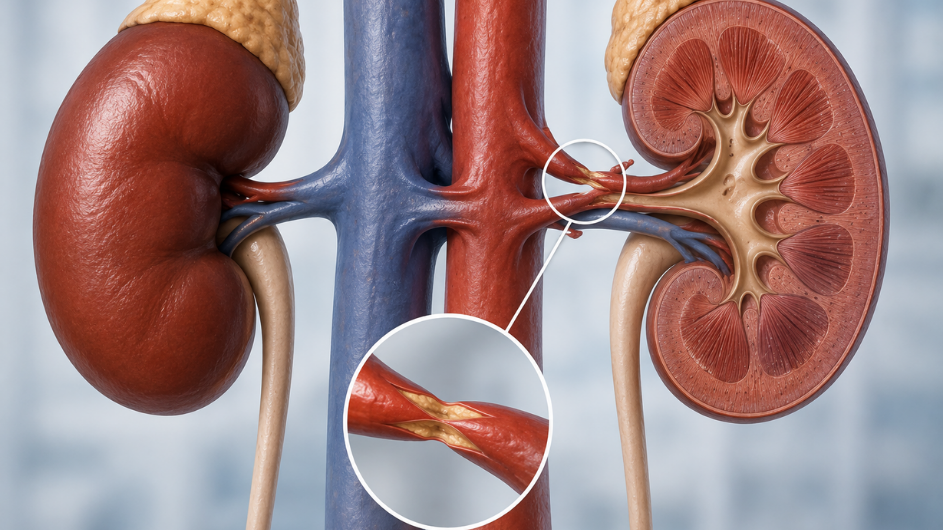
Renal Artery Stenosis
Renal artery stenosis is a narrowing of the arteries supplying the kidneys that can cause high blood pressure and reduced kidney function. The Kidney Clinic diagnoses and manages it to preserve kidney health.
Renal Artery Stenosis (RAS)
When the arteries feeding your kidneys narrow, blood flow drops — driving stubborn high blood pressure and declining kidney function. Early diagnosis protects your kidneys.
What is renal artery stenosis?
Renal artery stenosis is the narrowing of one or both arteries that supply blood to the kidneys, most often caused by atherosclerosis — a build-up of fatty plaque on the artery walls. The reduced blood flow can lead to high blood pressure that is hard to control and a gradual decline in kidney function.
At The Kidney Clinic, Dr. Anil K. Patel provides accurate diagnosis and a treatment plan matched to the severity of the narrowing — from medication and lifestyle changes to minimally invasive procedures.
Symptoms & causes
RAS can be silent early on. As it progresses, watch for:
- High blood pressure that is difficult to control
- Sudden worsening of previously controlled hypertension
- Declining kidney function
- Fluid retention
- Occasional abdominal or flank pain
How RAS affects your health
Left untreated, renal artery stenosis can have wide-reaching effects:
- Causes uncontrolled hypertension that strains the heart
- Reduces kidney function over time
- May progress to kidney failure if untreated
- Complicates blood-pressure management in dialysis patients
Diagnosis & treatment
Diagnosis
Blood-pressure monitoring and blood tests for kidney function, plus imaging — Doppler ultrasound, CT angiography, or MR angiography — to confirm and measure the narrowing.
Medication & lifestyle
For many patients, blood-pressure and cholesterol control, antiplatelet medication, and lifestyle changes are enough to manage the condition and its risks.
Restoring blood flow
For severe stenosis or significant kidney dysfunction, minimally invasive angioplasty with stenting — or, rarely, bypass surgery — reopens the artery and restores flow.
Follow-up & monitoring
Regular review protects your kidney function, keeps blood pressure in check, and catches any recurrence or new narrowing early.
Managing & preventing RAS
- Keep blood pressure, cholesterol, and diabetes well controlled
- Eat a heart-healthy, balanced diet
- Exercise regularly and maintain a healthy weight
- Quit smoking and manage stress
- Take medications as prescribed and attend follow-ups
Why choose Dr. Anil K. Patel
14+ years of dedicated nephrology and dialysis practice
Specialist training at MPUH Nadiad under Dr. M.M. Rajapurkar
Multidisciplinary care — nephrology with vascular and interventional input
Transplant centre partnerships with Mahavir Hospital & Universal Hospital
Advanced imaging and minimally invasive angioplasty & stenting
Care in English, Hindi & Gujarati, with prompt response
Frequently asked questions
What is renal artery stenosis (RAS)?
What causes it?
What are the symptoms?
How is it diagnosed?
Can it be treated without surgery?
How does RAS affect dialysis patients?
Can RAS lead to kidney failure?
Is surgery the only option?
What lifestyle changes help?
Can RAS come back after treatment?
Concerned about renal artery stenosis?
Speak directly with Dr. Anil K. Patel for prompt diagnosis and treatment that protects your blood pressure and kidney health.