
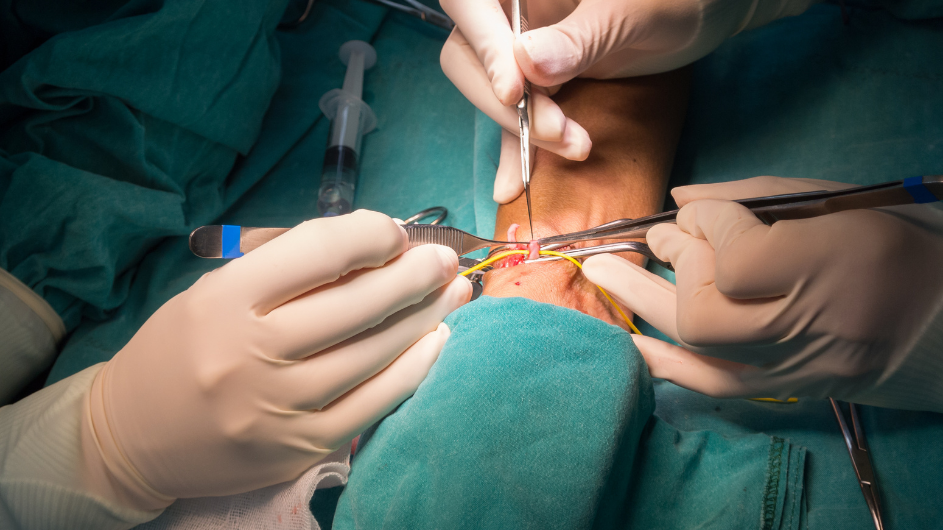
Arterio-venous fistula
An arterio-venous (AV) fistula is the preferred long-term access for hemodialysis, created by joining an artery and vein in the arm. Dr. Anil K. Patel provides AV fistula creation and complete vascular-access care.
Arterio-Venous Fistula (AVF)
The gold-standard access for haemodialysis — a durable, natural connection in your own arm that makes every dialysis session safer and more effective.
What is an AV fistula?
An arterio-venous fistula (AVF) is a surgically created connection between an artery and a vein, usually in the arm. It is the access point for haemodialysis — over several weeks it strengthens into a durable, high-flow vessel that can be needled repeatedly, allowing blood to be drawn, filtered, and returned during each session.
At The Kidney Clinic, Dr. Anil K. Patel and the vascular-access team create and care for your fistula, giving you reliable, long-lasting dialysis access.
Why the AVF is the gold standard
An AVF offers real advantages over catheters and grafts:
- The longest-lasting access, with fewer site changes
- A lower infection risk than catheters
- Higher blood flow for more effective dialysis
- A reduced clotting risk thanks to its natural configuration
The AVF procedure
Evaluation & vessel mapping
A physical examination plus ultrasound and vascular imaging assess blood flow and identify the most suitable artery and vein for the fistula.
Surgery
Under anaesthesia, the surgeon joins an artery and a nearby vein — by direct suturing, or with a synthetic graft where needed — to form a robust vessel.
Maturation
Over several weeks to a few months, the connection develops — the vessel thickens and strengthens so it can withstand repeated needle insertions.
First use
Once mature, the fistula is used for dialysis, providing the steady, high blood flow that effective treatment needs.
Ongoing care
Regular monitoring of the fistula's flow and the access site keeps it healthy and catches any problems early.
Care & complications
AVFs are generally safe and durable, but possible complications include:
- Infection
- Clotting
- Bleeding
- Stenosis (narrowing) of the access site
Why choose Dr. Anil K. Patel
14+ years of dedicated nephrology and dialysis practice
Specialist training at MPUH Nadiad under Dr. M.M. Rajapurkar
Nephrologists and vascular-access surgeons working together
Transplant centre partnerships with Mahavir Hospital & Universal Hospital
AVF creation with vessel mapping and long-term access care
Care in English, Hindi & Gujarati, with prompt response
Frequently asked questions
What is an arterio-venous fistula (AVF)?
Why is AVF important for dialysis?
How is an AVF created?
How long does an AVF take to mature?
What are the benefits over other access?
How do I care for my AVF?
Are there potential complications?
Can every dialysis patient have an AVF?
How do I prepare for AVF surgery?
Where can I learn more?
Preparing for dialysis access?
Speak directly with Dr. Anil K. Patel about AVF — the safest, longest-lasting access for your haemodialysis.